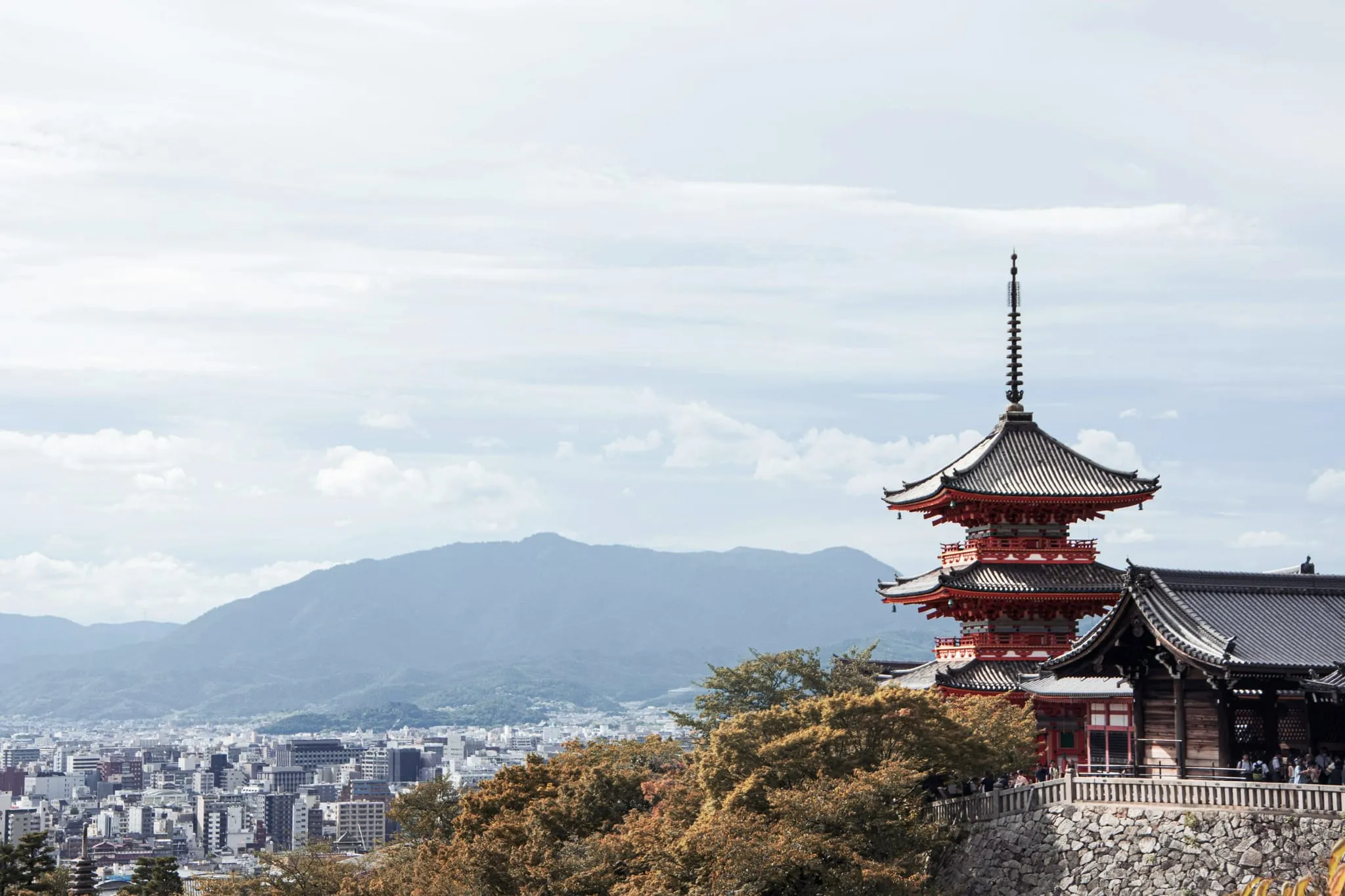
Kyoto, Japan
Kansai
This page may contain affiliate links.
- Kyoto has over 2,000 temples and shrines spread across a valley between mountains. The city is quieter and more traditional than Tokyo, with geisha districts and wooden architecture alongside modern infrastructure. Trains run on time and the subway is clean and easy to navigate with English signage.
- Eating alone is normal here - you'll see Japanese women dining solo everywhere from ramen counters to upscale kaiseki restaurants. Staff treat single diners the same as groups. English is common in tourist areas, and most restaurants have picture menus or English translations. Train stations have English announcements.
- Crime rates are very low. Walking around at midnight is generally safe, though pickpocketing can happen at crowded festivals. Police are visible but don't bother you. The emergency number 110 has translation services available.
- The city spreads out, so you'll need trains or buses to get between neighborhoods. Women-only train cars run during weekday rush hours (7:30-9:30 AM and 5:00-7:00 PM) on the Hankyu and Keihan lines, marked with pink signs. Buses get extremely crowded during cherry blossom and fall foliage seasons. A few entertainment districts can get loud late at night, but most areas stay quiet.
Daytime Safety
ExcellentNight Walking Safety
ExcellentHarassment Risk
LowTransportation
ExcellentPickpocketing Safety
ExcellentScam Safety
ExcellentPolice Visibility
GoodEmergency Services
ExcellentEvening Venues
ExcellentSolo Dining
ExcellentDrug Activity
LowHomelessness Visibility
Low- Gion
- Southern Higashiyama
- Northern Higashiyama
- Downtown Kawaramachi
- Arashiyama
- Kyoto Station Area
- Pontocho (daytime)
- Fushimi
- Higashi-Kujo (southeast of Kyoto Station at night)
- Shijo/Sanjo nightlife belt (late night)
- Pontocho back alleys (late night)
- Extremely crowded festival areas (pickpockets)
Japanese is the main language. English is common in major tourist areas like Gion and Downtown Kawaramachi, at hotels and popular restaurants. The Japan Visitor Hotline (050-3816-2787) has 24/7 multilingual support. Emergency services (110 and 119) have translators available. Many restaurants have picture menus or English translations. Train stations have English announcements and signs.
- Take off your shoes when entering traditional restaurants, ryokans, temples, and some shops - look for a step up or shoe lockers at the entrance. Bring socks without holes. Indoor slippers are usually provided, but switch back to outdoor shoes for restrooms.
- At temples and shrines, cover your shoulders and knees. Take off hats during prayer. Don't photograph worshippers or ceremonies. Most temples charge ¥300-600 entry. Photography might be restricted inside. Purify your hands and mouth at the water basin before approaching the main hall.
- Eating alone is normal here - don't feel awkward about it. But keep your voice down on phones in restaurants and trains. Don't tip - it can actually be offensive. Pay at the register when leaving, not at your table.
- Don't eat while walking, especially near temples and in traditional areas like Gion. Find a bench or designated eating area. There aren't many trash cans, so carry a bag for your garbage. The city is very clean and locals expect you to keep it that way.
- English is common in tourist areas but rare in residential neighborhoods. Learn some basics: 'sumimasen' (excuse me), 'arigatou gozaimasu' (thank you), 'gochisousama deshita' (thanks for the meal). Download Google Translate offline for emergencies. Many restaurants have plastic food displays in windows, which makes ordering easier without Japanese.
The first hour after landing is when you're tired, carrying everything, and easiest to take advantage of. Three things to sort before you fly:
Your ride from the airport. A driver who meets you in arrivals, at a price fixed before you fly — no haggling at the taxi rank.
Book an airport pickupData the moment you land. Maps, ride apps and a way to call for help as soon as you switch your phone on. An eSIM installs at home.
Get a good eSIMThe emergency number. Police: 110. Save it in your phone, not just on this page.
All emergency contacts
- The subway has two lines: Karasuma Line runs north-south, Tozai Line runs east-west, intersecting at Karasuma Oike Station. Trains are clean and run on time. Get an ICOCA card for easy payment on trains and buses - just tap and go. Subway fare averages ¥210-360 per ride.
- City buses cover areas the subway doesn't reach, with direct routes from Kyoto Station to major temples and tourist sites. Buses get extremely crowded during peak seasons, and routes can be confusing for first-timers. A one-day bus pass costs ¥700, pays for itself after three rides. Download the bus route app or grab a map at Kyoto Station.
- The Hankyu and Keihan train lines have women-only cars during weekday rush hours (7:30-9:30 AM and 5:00-7:00 PM), marked with pink signs. Taxis are safe and metered but expensive - ¥600-1,000 just to start. Drivers are honest and professional.
- Walking works in concentrated areas like Gion and Downtown. Renting a bicycle is popular. The city is mostly flat except near mountain temples. Be careful cycling near busy roads - bike lanes aren't always clearly marked.
- If you're planning day trips outside the city, consider renting a car.
Explore Kyoto with local guides and curated experiences.
- Spring (late March to early May) is cherry blossom season, usually peaking April 1-10. Temperatures range from 52-68°F (11-20°C). Expect massive crowds, high prices, and the need to book months ahead. The blossoms only last 1-2 weeks, so timing matters.
- Fall (October to November) has the foliage, peaking mid-November. Temperatures stay at 57-72°F (14-22°C), and the colors last longer than cherry blossoms - about 3-4 weeks. Still crowded but slightly less intense than spring.
- Summer (June to August) is hot and humid, often exceeding 86°F (30°C) with high humidity. June is rainy season. This is when you'll find the smallest crowds and cheapest prices. Some temples open late with evening illuminations so you can avoid the daytime heat.
- Winter (December to February) is cold, around 32-50°F (0-10°C). Snow sometimes dusts the temples. Fewest tourists and lowest prices, though some mountain temples close or have limited access in bad weather.
Help other women explore Kyoto safely
Safe Accommodations in Kyoto
Places to stay with features that matter when you travel alone, like female-only dorms, 24-hour reception and a central location.
Safety Features
- Female-only dormitory options
- Individual reading lights and privacy curtains
- Secure lockers in each room
- 24-hour reception
Walking Distance
Highlights
- Well-rated hostel in central downtown
- Modern design in renovated machiya townhouse
- Near Nishiki Market
- Social cafe space for meeting other travelers
Social Atmosphere
Medium - social cafe and common spaces but respectful of quiet hours
Safety Features
- Female-only floors available
- Smart keycard access system
- Individual pods with privacy curtains
- CCTV in common areas
Walking Distance
Highlights
- Well-rated hostel near Kyoto Station
- High-tech smart pod beds with adjustable positioning
- Five-minute walk from station
- Modern facilities with good security
Social Atmosphere
High - designed for millennial travelers with social events and communal spaces
Safety Features
- Women-only property with female staff
- Secure entry system
- Individual room locks
- Quiet residential location
Walking Distance
Highlights
- Women-only guesthouse
- Budget-friendly traditional Japanese style
- Central location
- Run by female staff
Social Atmosphere
Low - quiet and peaceful, ideal for rest and relaxation
Great for meeting other travelers.
Filter by female-only dorms and safety ratings.
Private rooms with more amenities.
Sort by guest reviews and location.
Neighborhoods in Kyoto
Explore the different areas of Kyoto and find the perfect neighborhood for your stay.
Gion & Southern Higashiyama
Gion and Southern Higashiyama have the most traditional atmosphere - geisha sightings, temple walks, historic streets. Very safe and tourist-friendly with good English support, but expect premium prices and crowds during peak seasons.
Downtown Kawaramachi
Kawaramachi is the most convenient area with good solo dining, shopping, and transport. Very safe but lacks the traditional atmosphere of Gion and temple areas.
Arashiyama
Arashiyama has natural beauty and temple gardens away from the city. Very safe and good for nature and quiet, but far from downtown with limited nightlife and early-closing restaurants.
Northern Higashiyama
Northern Higashiyama has peaceful temple experiences and the Philosopher's Path with fewer crowds. Good for contemplation and nature but limited dining and nightlife - you'll need to head downtown.
Kyoto Station Area
Kyoto Station has maximum convenience, safety, and English support with good transport. Fine for arrivals and departures, but no neighborhood atmosphere and you'll need transit to reach most attractions.
Pontocho & Nishiki Market
Pontocho and Nishiki Market have atmospheric dining and daytime market exploration. Safe but some places cater to groups or regulars. Better for special dining than casual hangouts.
Fushimi Inari & Fushimi
Fushimi Inari has one of Kyoto's most famous sights - hiking through thousands of torii gates. The sake district adds cultural exploration. Good for daytime visits but no accommodation or evening options - you'll head back to central Kyoto.