Hiroshima, Japan
Hiroshima Prefecture
This page may contain affiliate links.
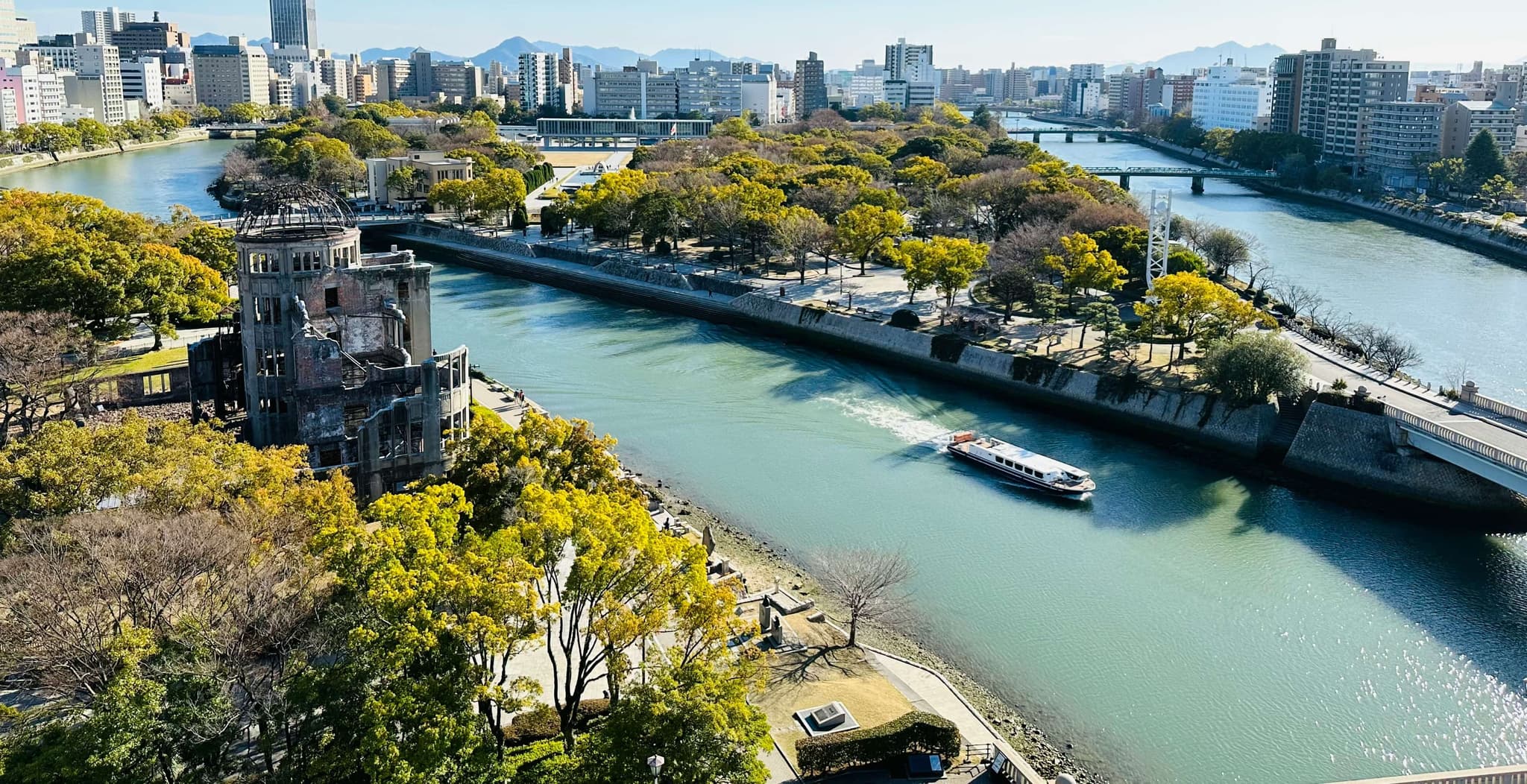
- Hiroshima is a compact river city on Japan's Seto Inland Sea, built across the delta of the Ota River. It is best known for the Peace Memorial Park and Museum, which deserve a full morning, but the rest of the city is green, flat and easy to navigate. The main sights, shopping streets and restaurants are within a few kilometres of each other and linked by streetcars.
- Japan has very low violent crime, and Hiroshima is calmer than Tokyo or Osaka. Women often travel, eat and sightsee alone here, and solo dining is normal, from okonomiyaki counters to ramen bars with single seats. Harassment is rare, but groping on crowded trains does happen in Japan, so the women-only train cars (marked on platforms during rush hours) are worth using on busy lines.
- The local specialty is layered okonomiyaki, along with oysters from the bay, tsukemen and momiji manju maple-leaf cakes. Many counters have English or picture menus, and the vending-machine ticket systems at ramen shops are easy to use with a translation app.
- The Hiroden streetcar network reaches nearly everywhere you will want to go, and the ferry to Miyajima and its floating torii gate works as an easy day trip. Late-night trouble is mostly drunk crowds and pushy street touts in the main entertainment district, and it is not aimed at visitors.
Daytime Safety
ExcellentNight Walking Safety
ExcellentHarassment Risk
LowTransportation
ExcellentPickpocketing Safety
ExcellentScam Safety
GoodPolice Visibility
GoodEmergency Services
GoodEvening Venues
GoodSolo Dining
ExcellentDrug Activity
LowHomelessness Visibility
Low- Peace Memorial Park and Motomachi
- Hondori and Hatchobori (main roads)
- Hiroshima Station area
- Kamiyacho and Hiroshima Castle area
- Hijiyama and Danbara
- Dobashi and Kanayamacho
- Nagarekawa side streets late at night
- Quiet back alleys around the entertainment district after the bars close
- Riverside paths and parks that are unlit very late at night
Japanese is the main language. English is common at major sights, hotels, the station and many central restaurants, but less so in small local shops. The Japan Visitor Hotline (050-3816-2787) is a 24-hour multilingual service for travellers. English-speaking operators are not always available on 110 or 119, so have a translation app ready or ask a hotel staff member or passer-by to help.
- Dress is relaxed, though Japanese women tend to avoid very low necklines in daily life. Shorts and sleeveless tops are fine in summer, and a more modest outfit suits the Peace Memorial Museum and shrines.
- Keep quiet at the Peace Memorial Park, the Peace Memorial Museum and the Atomic Bomb Dome. Avoid loud conversation and posed smiling selfies at memorials, and do not climb on or touch monuments.
- Speak quietly on trams and trains and do not take phone calls onboard. Tipping is not expected. Shoes come off in many guesthouses, traditional restaurants and temples, so wear socks without holes.
- English signage is good at main sights and stations but less common in small restaurants. A translation app with a camera function helps with menus. Cash is useful in small shops and some okonomiyaki counters, though cards are widely accepted in the centre.
The first hour after landing is when you're tired, carrying everything, and easiest to take advantage of. Three things to sort before you fly:
Your ride from the airport. A driver who meets you in arrivals, at a price fixed before you fly — no haggling at the taxi rank.
Book an airport pickupData the moment you land. Maps, ride apps and a way to call for help as soon as you switch your phone on. An eSIM installs at home.
Get a good eSIMThe emergency number. Police: 110. Save it in your phone, not just on this page.
All emergency contacts
- The Hiroden streetcar network is the easiest way to get around, with lines running to Peace Park, Hondori, Hiroshima Station and the Miyajimaguchi ferry connection. Most trams charge a flat fare within the city, you pay when you get off, and nationwide IC cards such as Suica and ICOCA are accepted. Check the last tram time if you are out in the evening.
- JR trains connect the station to Miyajimaguchi (for the Miyajima ferry), Iwakuni and the Shinkansen. Some routes have women-only cars during rush hours, marked on the platform. Crowded rush-hour trains are where groping is most likely, so the women-only car or a spot near the door helps.
- Taxis are metered and clean, with automatic doors. You can hail them on the street, book through the GO or Uber apps, or ask your hotel to call one. Tipping is not expected. The centre is also flat and walkable, with cycle lanes and rental bikes, and the riverside paths are good for walking by day.
- If you're planning day trips outside the city, consider renting a car.
Explore Hiroshima with local guides and curated experiences.
- March to May and October to November are the most comfortable seasons, with mild temperatures of roughly 10-25°C (50-77°F), cherry blossoms in late March and early April, and autumn colour in November.
- June and July are the rainy season, with humid, drizzly days. July to September is hot and very humid, with a typhoon risk in late summer and early autumn. Save the museums for wet days.
- December to February is cold but usually dry and sunny, with little snow, and the city is much quieter. Peace Park is busiest around early August, when the annual Peace Memorial Ceremony is held, so book accommodation well ahead for that period.
Help other women explore Hiroshima safely
Safe Accommodations in Hiroshima
Places to stay with features that matter when you travel alone, like female-only dorms, 24-hour reception and a central location.
Safety Features
- Female-only dorm option
- Lockable box at each dorm bed, plus lockers
- Reception staffed 8:00-14:00 and 15:00-21:00, so arrange late arrivals in advance
- Central location on a streetcar line
Walking Distance
Highlights
- Mixed and female-only dorms with partitioned, curtained beds
- Japanese-style private rooms with tatami floors and futons
- Shared kitchen open around the clock, and a rooftop terrace
- Walkable to Peace Memorial Park and the Atomic Bomb Dome
Social Atmosphere
Medium - easy place to meet other travellers
Safety Features
- Women-only guests
- Card-key access
- Front desk staffed from 5:00 until 1:00
- Quiet hours from 23:00 to 8:00
Walking Distance
Highlights
- Women-only property
- Private single, double and three-bed rooms rather than dorms
- Powder room for hair and make-up, with towels and toiletries provided
- Steps from the Atomic Bomb Dome and the Kamiyacho streetcar stops
Social Atmosphere
Low - calm and quiet, good for resting
Safety Features
- 24-hour front desk
- Card keys for rooms, and after 23:00 for the entrance, lifts and dorms
- Women-only shower area
- Safety box at each dorm bed
Walking Distance
Highlights
- Private singles, doubles and twins as well as a mixed dorm
- Curtained dorm beds with a safety box, reading light and USB charging
- Ground-floor cafe lounge, with breakfast available
- Walkable to Peace Memorial Park and Hondori shopping street
Social Atmosphere
Low to medium - a large, hotel-like hostel with a cafe lounge
Great for meeting other travelers.
Filter by female-only dorms and safety ratings.
Private rooms with more amenities.
Sort by guest reviews and location.
Neighborhoods in Hiroshima
Explore the different areas of Hiroshima and find the perfect neighborhood for your stay.
Peace Park and Motomachi
Peace Park and Motomachi have Hiroshima's most important sights in a calm riverside setting. The area is very safe by day and evening, but it is quiet after dark, so head to Hondori for nightlife.
Hondori and Hatchobori
Hondori and Hatchobori are the easiest places in Hiroshima to eat, shop and drink alone. The streets are busy, lit and well served by trams, and the only real caution is pushy street touts near the late-night areas.
Hiroshima Station Area
The station area is practical and safe, with plenty of food, lockers and transport links. It has less character than the riverside or Hondori, but it works for short stays and train connections.
Nagarekawa
Nagarekawa is lively for a night out, but it is the one part of central Hiroshima where women alone should be careful. Stick to main streets, established venues and daytime visits.
Kamiyacho and Hiroshima Castle
Kamiyacho and the Hiroshima Castle area are a calm, safe base close to the main sights. Evenings are quieter than in the entertainment districts, which suits anyone who wants an early night.
Hijiyama and Danbara
Hijiyama and Danbara are very safe and quiet, with a park, a museum and local streets. They suit anyone who wants a calm base, though evening choices are limited compared with the centre.