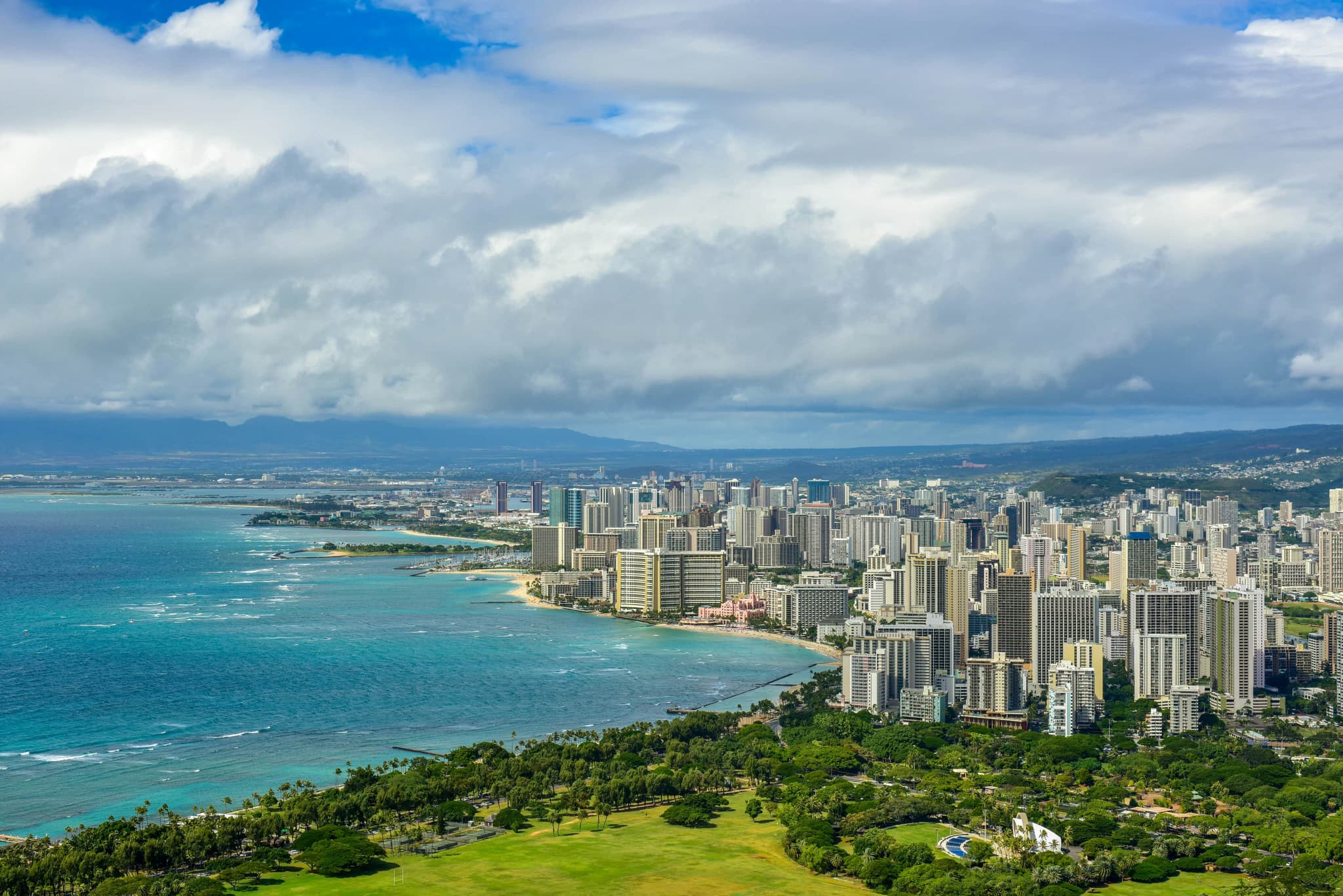
Honolulu, United States
Hawaii (Oahu)
This page may contain affiliate links.
- Honolulu is Hawaii's capital and the main gateway to Oahu. It's a beach city with an actual downtown, a working port and a strong local food scene. Waikiki has most of the hotels and the famous beach, while Kaka'ako, Kaimuki and Manoa show more of everyday life. English is the everyday language, and Hawaiian words like aloha, mahalo and kokua (help) are used by everyone.
- Traveling alone is straightforward. Restaurants, coffee shops and beach bars are used to people eating on their own, tourist areas stay busy and lit into the evening, and activities like surf lessons, hula classes and small-group hikes are an easy way to meet other travelers. Street harassment is uncommon and usually mild compared with many big US cities.
- The main risks are petty ones. Theft from parked rental cars at beaches and trailheads is the most common crime visitors run into, and unattended bags on the sand get taken. Chinatown and parts of Downtown have visible street homelessness and are quiet after dark. The ocean is the bigger physical danger: strong currents, shore break and flash-flooding streams hurt far more visitors than crime does.
- You can get around without a car using TheBus, the Skyline rail, bike share, rideshare and walking. Waikiki, Ala Moana and Kaka'ako are linked by frequent buses. A rental car only makes sense for the north shore or the windward coast.
Daytime Safety
ExcellentNight Walking Safety
GoodHarassment Risk
LowTransportation
GoodPickpocketing Safety
GoodScam Safety
GoodPolice Visibility
GoodEmergency Services
ExcellentEvening Venues
GoodSolo Dining
ExcellentDrug Activity
ModerateHomelessness Visibility
Moderate- Waikiki
- Ala Moana
- Kaka'ako / Ward Village
- Kaimuki
- Kapahulu
- Manoa
- Diamond Head
- Kahala
- Chinatown and Hotel Street (late at night)
- Downtown side streets after business hours
- Iwilei and Kalihi industrial streets after dark
- Isolated beach and trailhead parking lots after dark
- Unlit stretches of Kapi'olani Park at night
English is the main language, and Hawaiian words are part of daily speech. Dial 911 for police, fire or medical help; interpreters are available for other languages. If you can't speak safely, you can text 911 with your location and the type of emergency, though a call is preferred.
- Dress is casual everywhere. Swimwear stays at the beach and pool, and shops and restaurants expect a cover-up or a shirt and shorts. Take your shoes off when entering a home, and at some small guesthouses and shops.
- The pace is relaxed and drivers are polite. Honking is considered rude, and a wave of thanks (the shaka) is common. Say mahalo and be patient in lines.
- Respect the ocean and the land. Follow lifeguard flags and posted warnings, never turn your back on the waves, stay behind fences and closed-trail signs, don't touch sea turtles or monk seals, and don't take rocks, sand or coral. Reef-safe sunscreen is required by law.
- Tipping works as in the rest of the US: around 18-20% at sit-down restaurants and bars, plus a dollar or two per drink at a bar.
The first hour after landing is when you're tired, carrying everything, and easiest to take advantage of. Three things to sort before you fly:
Your ride from the airport. A driver who meets you in arrivals, at a price fixed before you fly — no haggling at the taxi rank.
Book an airport pickupData the moment you land. Maps, ride apps and a way to call for help as soon as you switch your phone on. An eSIM installs at home.
Get a good eSIMThe emergency number. Emergency Services (Police, Fire, Ambulance): 911. Save it in your phone, not just on this page.
All emergency contacts
- TheBus covers the whole island for a flat per-ride fare with a daily cap, and the HOLO card works on both TheBus and the Skyline rail. A limited-stop line connects the airport, Downtown, Ala Moana and Waikiki. Buses are generally safe, but late at night sit near the driver and keep your phone away from open windows and doors.
- Rideshare and taxis are easy to find in Waikiki and Ala Moana and are the simplest option after dark. Check that the car and plate match the app before getting in. Biki bike-share stations run from Chinatown through Kaka'ako and Waikiki to Diamond Head, and work best for daytime rides along the waterfront.
- Waikiki, Ala Moana, Kaka'ako and Kapahulu can all be walked, and the main streets are well lit. A rental car is only needed for the north shore and windward side. If you rent one, never leave anything visible inside, park in busy, well-lit spots, and don't leave valuables in the car at beaches or trailheads.
- If you're planning day trips outside the city, consider renting a car.
Explore Honolulu with local guides and curated experiences.
- April to October is the drier, sunnier season, with daytime temperatures around 80-88°F (27-31°C). The south-shore water is calm, which suits swimming and learning to surf.
- November to March is wetter, with more showers, cooler evenings around 65-75°F (18-24°C) and large winter swells on the north shore. South-shore Waikiki stays comfortable, and this is the season for humpback whale watching.
- Summer school holidays, December and major holidays are the busiest and most expensive times, so book rooms early. Spring and fall tend to have the best mix of weather, prices and crowds.
Help other women explore Honolulu safely
Safe Accommodations in Honolulu
Places to stay with features that matter when you travel alone, like female-only dorms, 24-hour reception and a central location.
Safety Features
- Female-only dorm options
- Lockers in every dorm
- 24-hour reception
- Guests must be 18 or older and show ID and proof of onward travel at check-in
Walking Distance
Highlights
- Female-only dorms of 4 to 8 beds, each with an ensuite bathroom
- One block from Waikiki Beach
- Free beach gear, communal kitchen and outdoor lounge
- Guest activities such as karaoke and movie nights
Social Atmosphere
High, with many solo travelers and social events most nights
Safety Features
- Women-only property
- Storage lockers in the dorms and the lobby
- Dorms limited to ages 18-45; older guests contact the hostel before booking
Walking Distance
Highlights
- Women-only hostel with no male guests on the property
- Central Waikiki location
- Storage lockers in the dorms
- Easy place to meet other women traveling alone
Social Atmosphere
Medium, relaxed and all women
Safety Features
- Female-only dormitory
- Lockers in every dorm
- Photo ID and proof of onward travel required at check-in
Walking Distance
Highlights
- Air-conditioned 8-bed female dorm with an ensuite bathroom
- One block from Kuhio Beach in Waikiki
- Free linens, Wi-Fi, luggage storage and beach toys
- Semi-private rooms also available
Social Atmosphere
High, with a communal kitchen, a lanai with hammocks and weekly group hikes
Great for meeting other travelers.
Filter by female-only dorms and safety ratings.
Private rooms with more amenities.
Sort by guest reviews and location.
Neighborhoods in Honolulu
Explore the different areas of Honolulu and find the perfect neighborhood for your stay.
Waikiki
Waikiki is the most convenient and best-lit base in Honolulu, with a visible police presence, plenty of places to eat and drink alone, and easy transport. The main downsides are petty theft in crowded spots and high prices.
Ala Moana
Ala Moana is a safe, convenient shopping and beach district that works best for daytime visits. It's quiet after dark, so take a rideshare or a short bus ride to Waikiki or Kaka'ako for evening plans.
Kaka'ako
Kaka'ako is the most local-feeling food and art district, with busy main streets by day and early evening. Stick to the main streets after dark and take a rideshare back.
Downtown & Chinatown
Downtown and Chinatown have history, food and art, and are comfortable by day. They get rougher after dark, so visit early, stick to busy streets and take a rideshare back.
Kaimuki & Kapahulu
Kaimuki and Kapahulu are relaxed local neighborhoods with some of the best food in Honolulu and low crime. They suit daytime and early evening, with a rideshare for late nights.
Manoa
Manoa is a calm, green university valley that is safe by day and good for a waterfall hike and a quiet cafe visit. Nightlife is minimal, and the main risks are slippery trails and trailhead car break-ins.